Novi Heder 2021 001 1

PAVIĆ AT THE CENTRE FOR EXTRATERRESTRIAL COMMUNICATION

A lecture on Milorad Pavić and Julian Barnes at the International NAUKA 0+ Festival in Moscow

A lecture on Milorad Pavić and Julian Barnes at the International NAUKA 0+ Festival in Moscow

On 9 October 2026, Moscow State Linguistic University hosted the lecture "A Signal from the Text: How the Reader Deciphers Personality in the Postmodern Novel", devoted to the works of Milorad Pavić and Julian Barnes.

The lecture formed part of the programme of the Centre for Extraterrestrial Communication, Moscow State Linguistic University's thematic platform at the International NAUKA 0+ Festival.

Milica Nikolić, Junior Research Fellow at MSLU's Laboratory of Comparative Literature and Cultural Diplomacy, discussed the ways in which Pavić and Barnes use parody, grotesque, archetypes, quotations and nonlinear narration to shape their characters and transform the reader into an active participant and co-author of the literary work.

Pavić's prose thus entered an unusual yet remarkably congenial scientific context: a programme devoted to language, consciousness, the interpretation of the unknown and the possibilities of communication with different worlds.
Official lecture page

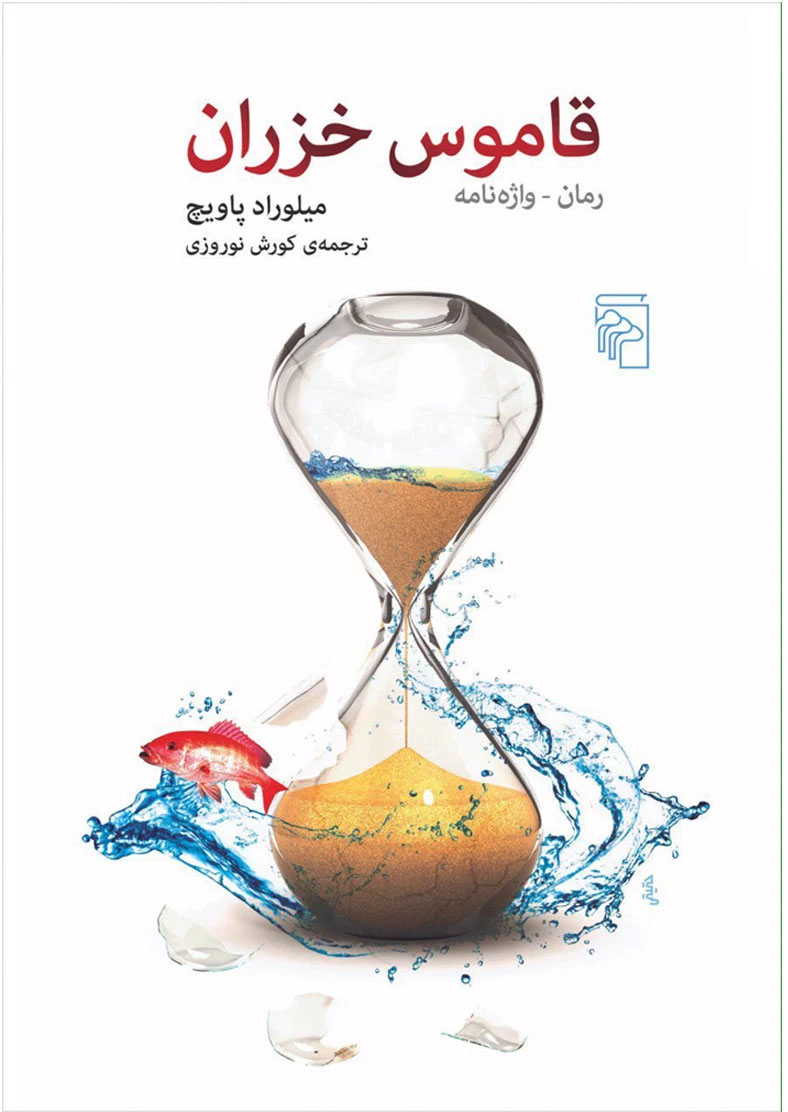
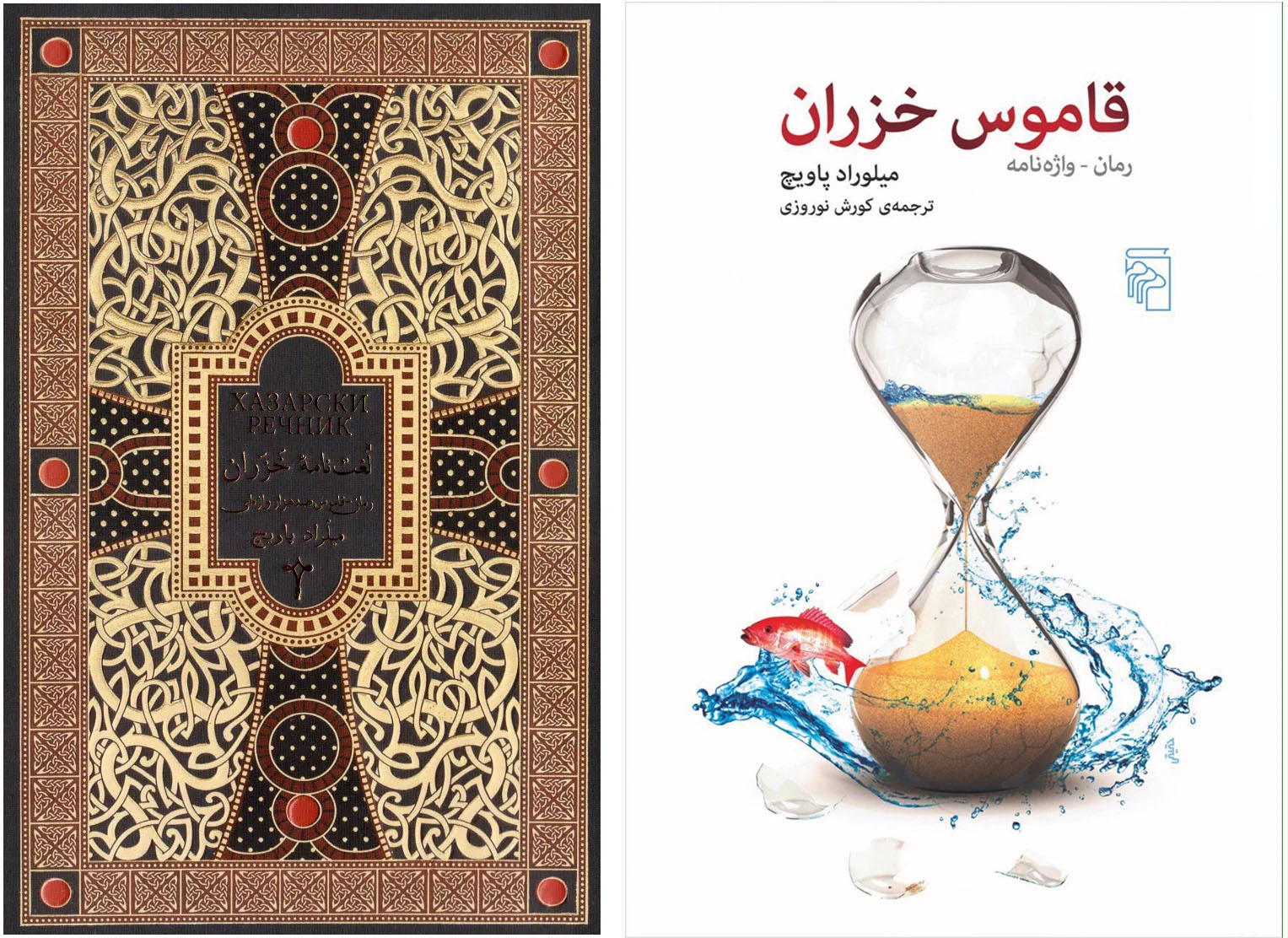
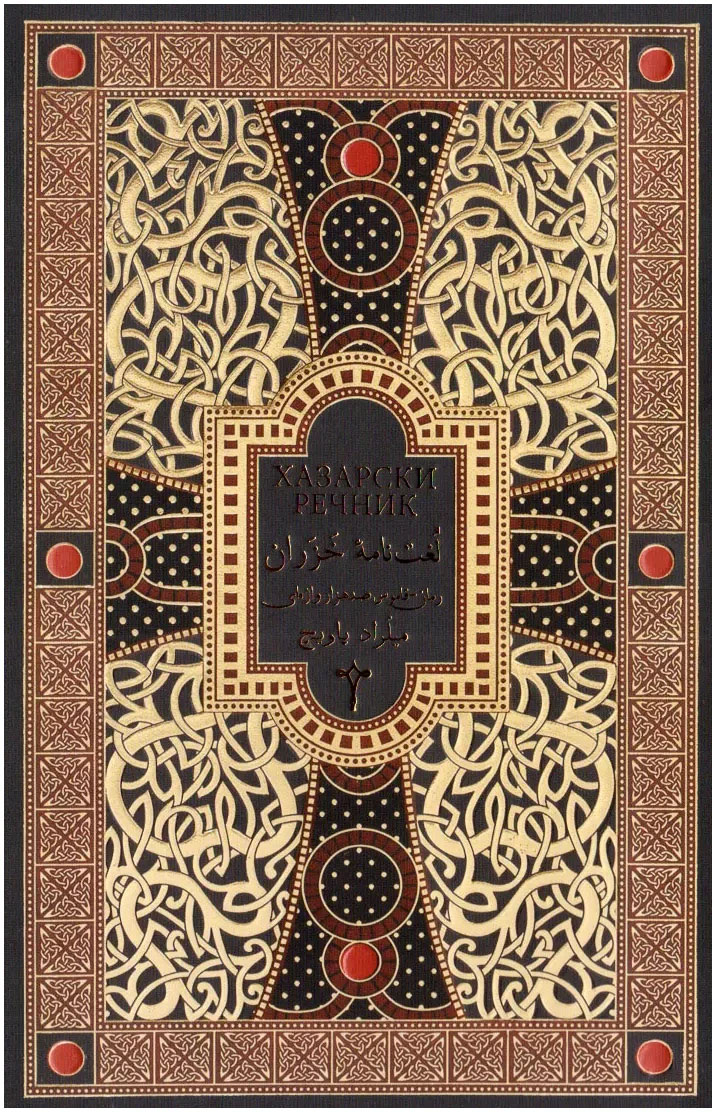
THE SECOND, UNCENSORED IRANIAN EDITION OF “DICTIONARY OF THE KHAZARS”

I should have written about this book earlier. The news, however, comes only now, with a delay caused not by literature but by history: war severed connections and separated the family that had spent years working on this unusual edition.

This is the second Iranian edition of Milorad Pavić’s “Dictionary of the Khazars” — and, most importantly, an uncensored edition.

“Dictionary of the Khazars” had already been published in Iran. The new edition, published by the Tehran publishing house Noghreh, has an entirely different history.

It all began in 2021, when literary translator Youltan Sadykova contacted me from Tehran. This was the beginning of a long and unusually warm correspondence with her and the Aslani-Fazaeli family, who are behind the Noghreh publishing house.

Books in Iran are subject to very strict censorship, but the publishers succeeded in obtaining permission from the relevant religious authorities to publish “Dictionary of the Khazars” uncensored. For this reason alone, this edition occupies a special place among the many translations of Pavić’s novel.

I also wrote a special text about Milorad Pavić and “Dictionary of the Khazars” for this edition. Youltan translated it into Persian, and the publishers included it in the book as a letter from me — a kind of manuscript, printed on a separate sheet designed like an unfurling papyrus scroll.

And then the war came.

Youltan and her husband Amin, together with his parents, the founders of the Noghreh publishing house, had been planning to move to France. Amin’s parents received their visas, while Youltan and Amin were still waiting for a response from the embassy when the war began. Youltan, who had taken part in protests in Iran and, as a Russian citizen, also feared for her own safety, temporarily returned to Russia to stay with her family. Amin and his parents remained in Iran.

And so the family that created this edition of “Dictionary of the Khazars” found itself separated.

That is why I am only now publishing the news about the book.

The video accompanying this news was filmed by Amin shortly after the book was published. His is the voice we hear; the hands opening the book and unfurling my text belong to Youltan.

At that time, the two of them were still together.

The book remained.

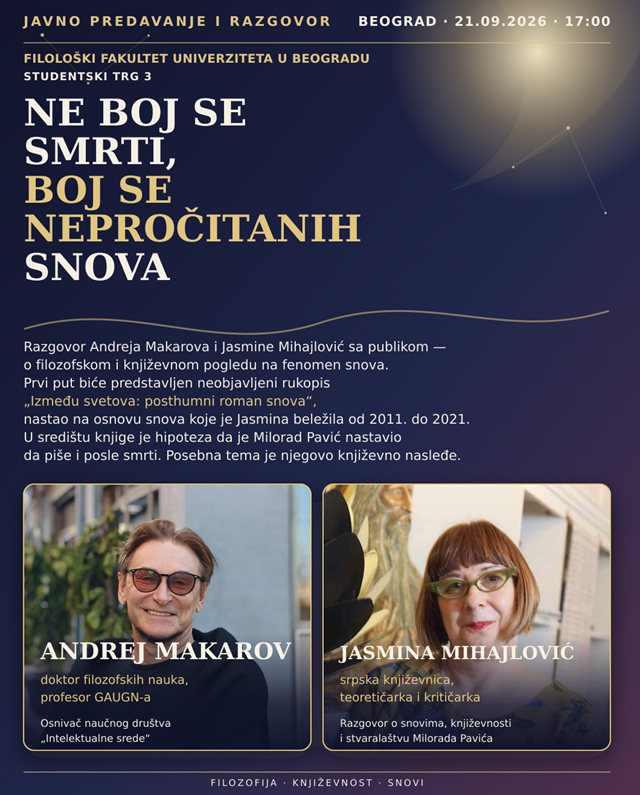
“Don’t Fear Death, Fear Unread Dreams” — Andrei Makarov and Jasmina Mihajlović at the Faculty of Philology

On 21 September 2026, the Faculty of Philology of the University of Belgrade, where Jasmina Mihajlović graduated, will host a public lecture and conversation between Russian philosopher Andrei Makarov and writer Jasmina Mihajlović entitled “Don’t Fear Death, Fear Unread Dreams.”

The conversation with the audience will explore philosophical and literary perspectives on the phenomenon of dreams — dreams as a space of imagination, memory, another reality, and a possible dialogue between worlds.

A special place in the conversation will be devoted to the work of Milorad Pavić, in whose writing dreams, waking reality, time, death, and the boundaries between worlds continually intertwine.

The evening will also include the first public presentation of the still unpublished manuscript “Manuscript Between Worlds: A Posthumous Novel of Dreams,” based on dreams recorded by Jasmina Mihajlović between 2011 and 2021. At the heart of the book lies a literary hypothesis: that Milorad Pavić continued to write after his death.

Andrei Makarov is a Doctor of Philosophy, professor, philosopher and cultural theorist whose research encompasses the philosophy of culture, memory, identity, art and practical philosophy.

The event is conceived as an open and interactive conversation between Andrei Makarov, Jasmina Mihajlović and the audience — with no predetermined course or outcome.

Faculty of Philology, University of Belgrade
Studentski trg 3
21 September 2026, 5 p.m.

*

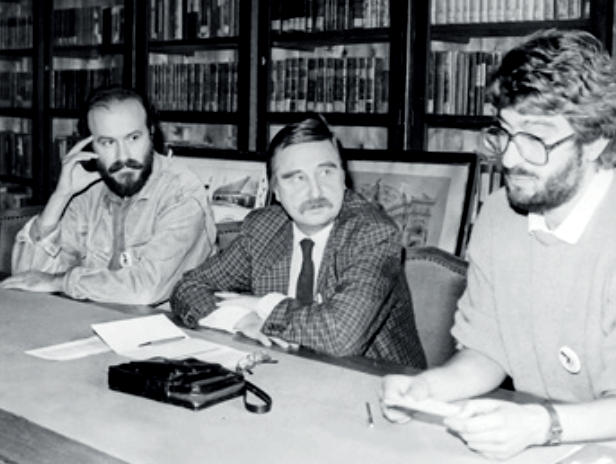
Poetic Affinity and Postmodernism in Milorad Pavić and Sava Damjanov

The collaboration between two professors and writers, Sava Damjanov and Milorad Pavić, represents one of the most interesting and fruitful relationships in contemporary Serbian literature and academic life. It went far beyond the conventional relationship between professor and student, developing into a long-standing intellectual affinity, a shared literary mission, and a sincere friendship.

Pavić recognized in Damjanov a young scholar who possessed a special "intuitive nerve" for discovering neglected, eccentric, and forgotten authors.

Pavić wrote forewords to Sava Damjanov's key early scholarly books (The Great Code, on Đorđe Marković Koder, and Gardens of the Unreal). In doing so, he lent academic legitimacy to Damjanov's then radical, postmodern approach to interpreting literary tradition.

What bound them most strongly was their shared passion for literary fantasy, linguistic experimentation, and postmodernism.

Revolution in form: while Pavić astonished the world with his nonlinear labyrinths of prose (such as Dictionary of the Khazars), Damjanov was one of the first and most important Serbian theorists to analyze and decode these procedures in detail and establish their place within Serbian literary scholarship.

Provocation and play: both understood literature as an interactive game with the reader, breaking down the rigid conventions of realism and introducing elements of phantasmagoria, mysticism, and defamiliarization. Damjanov often emphasized that Pavić was "the most unusual man he had ever met" – a gentleman in his manners, yet an absolute revolutionary in his way of thinking.

As chief editor, Damjanov led a major publishing undertaking: the preparation and publication of the nine-volume collected Literary-Historical and Essayistic Works of Milorad Pavić (published by the Cultural Centre of Vojvodina "Miloš Crnjanski" and the National Library of Serbia). Damjanov prepared these texts according to the most advanced textual scholarship standards, supplementing them with scholarly apparatus and reception studies, thus ensuring that Pavić's groundbreaking scholarly work would remain permanently accessible to new generations.

The relationship between Pavić and Damjanov is a rare example in Serbian culture of two powerful, original, and authentic literary figures who did not come into conflict but instead complemented one another. Pavić gave Damjanov wings and intellectual freedom within the academic world, while Damjanov repaid him with decades of profound theoretical understanding and, ultimately, by giving definitive form to his scholarly legacy.